
It matters because builders, designers, and DIYers rely on this grading to choose plywood that suits floors, bracing, roofs, and other load-bearing tasks.
What is F14 grade plywood, in plain terms?
F14 grade plywood is structural plywood that meets a specific stress grade used in Australian timber design. It signals a minimum benchmark for strength properties like bending capacity and stiffness, rather than describing appearance.
They will commonly find it used where the plywood is expected to do real work structurally, not just act as a lining or decorative panel.
What does the “F14” rating actually measure?
The “F” stress grade relates to structural performance values used in Australian standards and engineering design. It is primarily about how the panel performs in bending, including strength and stiffness.
In practice, it helps designers estimate how a sheet will behave when spanning between supports or resisting forces in walls, floors, and roofs.
How does F14 compare with other structural plywood grades in Australia?
Within Australian practice, F14 grade plywood sits as a commonly specified structural option, while higher stress grades can be selected when more capacity is needed. The right choice depends on span, loads, spacing of supports, and the role the sheet plays in the structure.
They should treat F-grade selection as part of a whole system: framing, fasteners, adhesives, moisture exposure, and installation quality all influence real-world performance.
Does F14 grade plywood automatically mean “structural plywood”?
In most buying and building contexts, F14 grade plywood is sold and used as structural plywood, but they should still check the stamp or documentation. Structural suitability also depends on compliance marking and the correct product type for the application.
If they cannot find a structural stamp, supplier declaration, or compliance information, it is risky to assume it is acceptable for load-bearing work.
Where is F14 grade plywood typically used in Australian builds?
They often use F14 grade plywood for wall bracing, subfloors, soffits in structural applications, roof sarking support in some designs, and general structural sheathing where the design calls for that grade. It is also seen in sheds, garages, and renovations where a reliable structural sheet is needed.
The exact use should match the engineer’s details or the relevant Australian building documentation for the project.
How much structural strength can they expect from F14 grade plywood?
They can expect F14 grade plywood to provide dependable structural performance when installed correctly and used within its design limits. The grade is a guide for minimum structural capacity, not a guarantee that any sheet will suit any span or load.
Actual strength in a build depends on sheet thickness, span between joists or studs, edge support, fastener type and spacing, and whether the panel remains dry and properly restrained.
Why do thickness and span matter as much as the F14 grade?
A stronger grade does not eliminate the need to select the correct thickness and support spacing. Two sheets with the same F-grade can perform quite differently when one is thicker or benefits from better edge support. Plywood thickness for concrete formwork should therefore be assessed alongside grade and the planned support arrangement.
They should think of F14 grade plywood as one input in a checklist that also includes thickness selection, joist or stud spacing, blocking at joins, and correct fixings.
What role does moisture exposure play in structural performance?
Moisture can reduce stiffness, cause swelling, and contribute to long-term degradation if the wrong bond type or product is used. In Australian conditions, that is especially relevant in coastal areas, wet subfloors, or during construction when sheets can be rained on.
They should confirm the bond classification and intended exposure rating rather than relying on F14 grade plywood alone to indicate durability in damp conditions.
How can they identify F14 grade plywood on-site or at the timber yard?
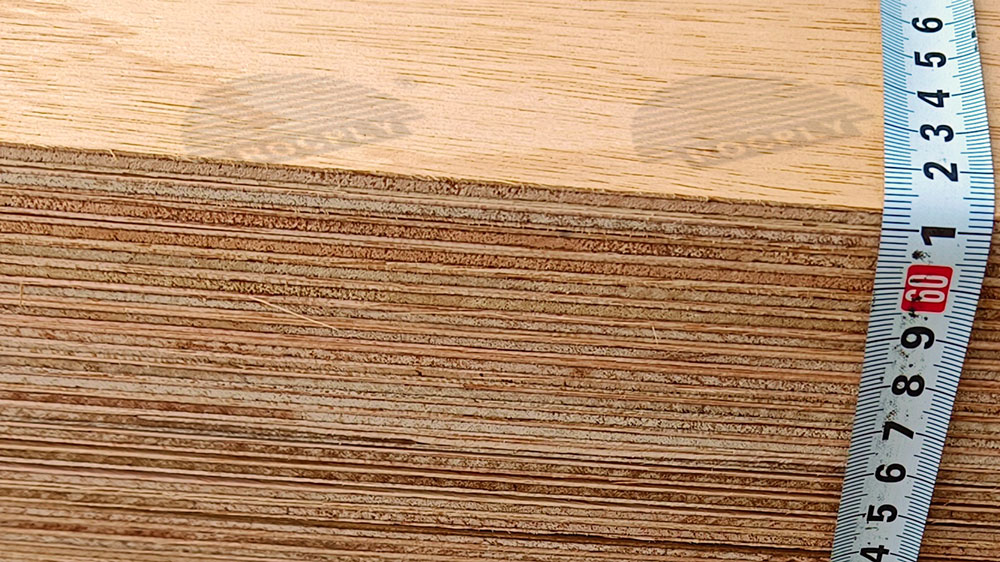
They should look for an ink stamp or branding on the sheet showing the stress grade, along with key details such as standard compliance, manufacturer identification, thickness, and, where applicable, bond type. Reputable Australian suppliers generally provide supporting documentation for these claims, making structural plywood certification useful when verifying product specifications.
If the sheet is unmarked, they are better off treating it as non-structural until proven otherwise, even if it was sold verbally as F14 grade plywood.
Does F14 grade plywood tell them anything about appearance quality?
No, the F-grade is about structural capacity, not visual finish. A sheet can be structurally rated and still show knots, patches, or surface variation depending on its face grade.
If appearance matters, they should specify a suitable face grade separately while still keeping the required structural rating, including F14 grade plywood if that is what the design calls for.
How does installation affect the real strength they get from the sheet?
Installation details can make or break structural performance. Poor fastening, missed studs, overdriven nails, inadequate edge gaps, or unsupported joins can all reduce the strength that the grade suggests they should achieve.
To get the most out of F14 grade plywood, they should follow the fixing schedule, ensure proper edge support, maintain expansion gaps, and keep sheets flat and protected before installation.
Is F14 grade plywood suitable for flooring in Australian homes?
It can be, but suitability depends on the floor system design, thickness, joist spacing, and whether the product is specified for that exact use. Many floors rely on structural sheet flooring products that meet the required ratings and installation standards.
They should confirm that F14 grade plywood matches the project’s flooring requirements and that the sheet is intended and stamped for structural flooring use, not just general structural sheathing.
When should they choose a higher grade than F14?
They should consider a higher grade when spans are larger, loads are higher, support spacing is wider, or when an engineer specifies a higher stress grade for a critical element. Multi-storey designs, heavy concentrated loads, or certain bracing demands may also push specifications upward.
If there is any uncertainty, they should not “guess up” or “guess down” from F14 grade plywood and instead follow engineering documentation or seek advice from an Australian building professional.
Does F14 grade plywood meet Australian compliance requirements by itself?
A stress grade alone does not equal full compliance. They still need the sheet to comply with the relevant Australian Standard for the product type, and the build must meet NCC requirements and any local council or certifier expectations.
They should treat F14 grade plywood as one line item in compliance, alongside documented certification, correct installation, and the right product for the exposure and structural role.
What common mistakes do Australians make when buying structural plywood?
A frequent mistake is buying based on price and assuming all “structural” sheets are equal. Another is overlooking the stamp, using the wrong thickness, or skipping edge support and blocking at joins.
They also sometimes confuse structural rating with water resistance, then use F14 grade plywood in wet areas without confirming the appropriate bond and exposure classification.
How should they decide if F14 is enough for their project?
They should start with the job the sheet must do: bracing, flooring, roof diaphragm, or general sheathing. Then they should match the design details for thickness, span, support spacing, and fastening, and confirm the sheet’s markings and compliance documents.
If the project is structural and falls outside straightforward guidance, they should consult an engineer or qualified Australian building professional rather than selecting materials based purely on habit. LVL formwork systems may be worth considering as part of the design process, but the final material choice should always be based on project-specific structural requirements and professional advice.
FAQs (Frequently Asked Questions)
What is F14 grade plywood and why is it important in Australian construction?
F14 grade plywood is a structural plywood that meets specific Australian stress grades, indicating minimum bending strength and stiffness. It is crucial for builders, designers, and DIYers to select appropriate plywood for load-bearing applications like floors, walls, roofs, and bracing.
What does the ‘F14’ rating measure in plywood?
The ‘F14’ rating measures the structural performance of plywood in terms of bending strength and stiffness according to Australian standards. It helps predict how the panel will behave under load when spanning between supports or resisting forces in structural elements.
Where is F14 grade plywood typically used in Australian buildings?
F14 grade plywood is commonly used for wall bracing, subfloors, soffits in structural applications, roof sarking support, general sheathing where structural integrity is required, as well as in sheds, garages, and renovations that demand reliable structural sheets.
Does F14 grade plywood guarantee suitability for all structural applications?
No, while F14 grade indicates a minimum structural capacity, suitability depends on factors like sheet thickness, span between supports, edge support, fasteners used, moisture exposure, and correct installation. Always verify compliance markings and project-specific requirements before use.
How do thickness and span affect the performance of F14 grade plywood?
Thickness and span are critical alongside the F14 grade because two sheets with the same grade can perform differently based on thickness and support spacing. Proper thickness selection and framing design ensure the plywood meets load demands effectively.
How can I identify authentic F14 grade plywood on-site or at timber suppliers?
Authentic F14 grade plywood usually has an ink stamp or branding showing the stress grade along with compliance marks, manufacturer details, thickness, and bond type. Reputable suppliers provide documentation confirming these details. Unmarked sheets should be treated as non-structural until verified.